
Queue Management System in Islamabad: A 2026 Practical Guide
Banks, hospitals, telecom franchises, and government offices in the capital face the same daily headache: crowded waiting areas and impatient visitors. Installing a dependable queue management system in islamabad is the most direct fix. This guide walks Islamabad businesses through how these systems work, what they cost in effort and value, and how to deploy one successfully in 2026.
The Problem With Traditional Lines in Islamabad
Physical queues create four recurring problems for capital-based service organizations. First, they crowd small lobbies. Second, they spark disputes over who arrived first. Third, they hide performance data, so managers cannot see where service slows down. Fourth, they push frustrated customers toward competitors.
A digital queuing platform solves all four at once by replacing the line with an orderly, tracked, virtual flow that customers can join from a kiosk or their phone.
How a Queue Management System Works, Step by Step
The visitor journey through a modern system is simple and fast. Understanding it helps you explain the change to both staff and customers.
- Arrival and check-in: The visitor selects a service on a kiosk or scans a QR code.
- Ticket issued: A digital ticket assigns a position in the correct service queue.
- Comfortable waiting: The visitor sits or steps away, watching status on screens or a phone.
- Smart calling: The system routes the visitor to the next free, suitable counter.
- Service and feedback: After service, a quick rating captures satisfaction data.
Features Islamabad Organizations Should Prioritize
Not every feature matters equally in the local context. Based on deployments across the twin cities, these capabilities deliver the most value.
Bilingual Interface
Urdu and English support ensures every visitor, regardless of background, understands the ticketing and calling process without confusion.
SMS Notifications
With high mobile penetration in Pakistan, SMS alerts let customers leave a crowded office, run an errand, and return exactly when called. This single feature transforms the waiting experience.
Multi-Counter Analytics
Managers gain visibility into service times per counter and per staff member, enabling data-driven scheduling during peak hours around midday and after prayers.
Comparing Queuing Approaches for Islamabad Businesses
| Approach | Wait Experience | Data Insight | Best For |
|---|---|---|---|
| Manual physical line | Crowded, stressful | None | Very small offices |
| Basic ticket dispenser | Orderly indoors | Minimal | Single-counter shops |
| Digital queue with SMS | Flexible, mobile | Strong | Banks, clinics, telecom |
| Enterprise multi-branch | Seamless network-wide | Advanced | Chains and agencies |
What Is the ROI of a Queue Management System in Islamabad?
Return on investment shows up in three areas: staff productivity, customer retention, and reputation. Productivity rises because staff serve a balanced flow instead of scrambling during unpredictable rushes. Retention improves because visitors who wait comfortably come back. Reputation grows through fewer public complaints and better online reviews.
A concrete tip from real rollouts: publish your average wait time internally as a weekly KPI. When branch managers see the number every Monday, they naturally optimize toward it. Data that stays hidden in a dashboard changes nothing; data that becomes a shared target drives improvement.
The value of efficient public and private services is emphasized by international bodies as well. The World Bank’s digital development guidance highlights how digitizing service delivery reduces friction for citizens and businesses, a principle that applies directly to queue automation in Pakistan’s capital.
Deployment Roadmap for 2026
A structured rollout keeps the project on time and on budget. Follow these phases.
- Assess: Map your busiest hours, service types, and current pain points.
- Design: Define queues, routing rules, and screen placements.
- Install: Set up kiosks, displays, and network connectivity.
- Train: Coach staff on the calling workflow and the analytics dashboard.
- Optimize: Review data monthly and refine routing and staffing.
For maintenance and support, keeping supplies and accessories stocked through quality service providers reduces downtime and keeps your service desks running smoothly.
Extending Queuing Beyond the Branch
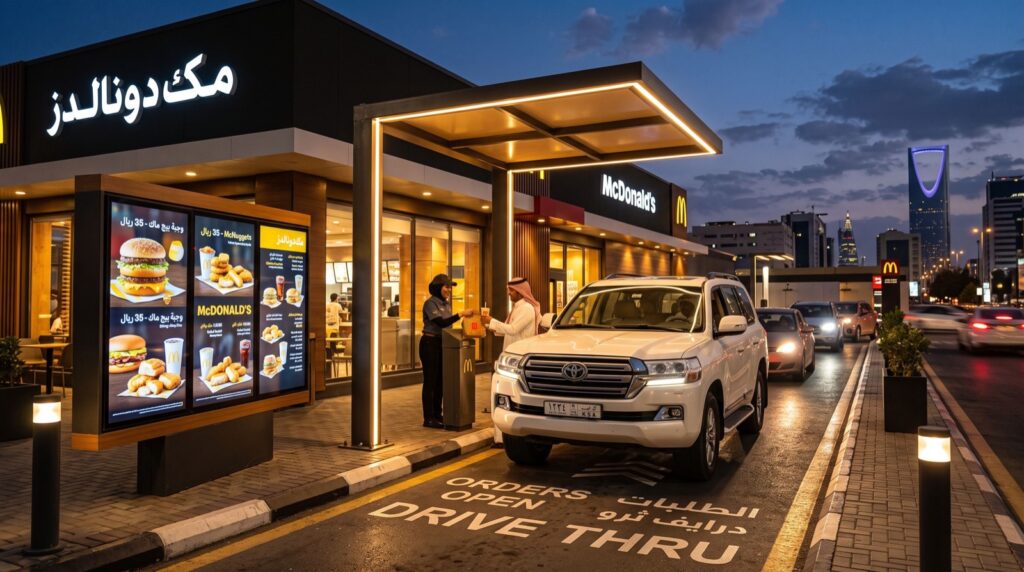
Islamabad organizations increasingly connect indoor queuing with other service channels. For quick-service restaurants and pharmacies with vehicle lanes, drive-thru queuing is a natural extension. Solutions proven in demanding markets, such as an HME drive thru in saudi arabia platform, show how the same throughput principles apply outdoors, and many of those technologies are now available to operators across Pakistan too.
Real-World Scenarios in the Capital
Abstract benefits become clearer with concrete examples drawn from typical Islamabad service points. Consider a busy bank branch in the Blue Area during salary week. Without a system, the lobby overflows and tellers face a wall of impatient customers. With digital queuing and SMS alerts, those same customers take a ticket, step out to a nearby cafe, and return only when notified. The lobby stays calm, and tellers work through a steady, balanced flow instead of a stressful surge.
Now picture a private clinic in F-8. Patients arrive anxious and unwell, and a crowded corridor makes the experience worse. A queue system lets them wait seated or from their car, receive a text as their turn approaches, and walk in composed. Staff report fewer confrontations and smoother mornings, while doctors keep to schedule more reliably.
A telecom franchise offers a third example. SIM activations, bill payments, and device troubleshooting each take very different amounts of time. Categorized queues route quick tasks away from lengthy support cases, so a customer paying a bill is not stuck behind a complicated warranty claim. Abandonment drops and daily throughput climbs noticeably.
Choosing Screen and Kiosk Placement
Placement is a small detail with outsized impact. Displays must be visible from every seat in the waiting area, and kiosks should sit near the entrance where arriving visitors naturally pause. Poorly placed hardware causes missed calls and confusion, undermining an otherwise excellent system. Walk your own lobby from a visitor’s perspective before finalizing the layout.
Frequently Asked Questions
Is a queue management system suitable for small offices in Islamabad?
Absolutely. Entry-level systems with a single kiosk and display suit small clinics, franchise outlets, and service counters. You can start small and scale as demand grows.
Does it support Urdu and English?
Yes. Reputable platforms provide fully bilingual interfaces and audio announcements, which is important for serving Islamabad’s diverse visitor base clearly.
How does SMS notification improve the experience?
SMS alerts let customers leave a crowded waiting area, handle other tasks, and return precisely when their turn approaches. This reduces crowding and dramatically improves satisfaction.
Can we integrate the system with our existing software?
Most modern platforms offer APIs to connect with CRM, appointment booking, and counter applications, so the queue system fits into your current workflow rather than replacing it.
Conclusion
A queue management system in Islamabad turns crowded, chaotic waiting areas into orderly, measurable service flows. By prioritizing bilingual support, SMS notifications, and actionable analytics, capital-based organizations can boost productivity, retain customers, and protect their reputation in 2026. Start with a focused pilot, treat wait time as a shared KPI, and partner with experienced specialists to design a system that fits your exact needs.