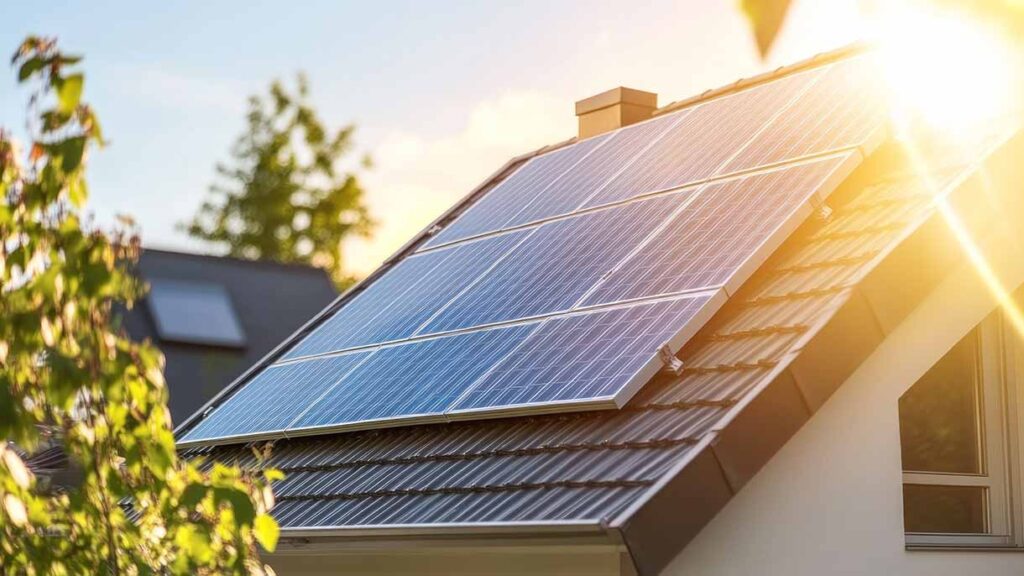
Pakistan is currently witnessing an unprecedented energy transformation. With electricity tariffs having surged dramatically and frequent power disruptions affecting daily life, businesses and households are actively seeking reliable alternatives. Solar energy has emerged not just as an option, but as a practical and economic necessity. Pakistan imported 17 GW of solar panels in 2024—twice the volume imported in 2023—making it one of the largest importers of solar technology globally . This rapid adoption, however, comes with significant challenges. The market is flooded with options, varying widely in quality, efficiency, and warranty support.
Selecting the Best Solar Company in Pakistan is therefore more critical than selecting the equipment itself. The right company ensures you receive certified products, professional engineering design, adherence to safety standards, and reliable after-sales support—factors that determine whether your investment delivers savings or becomes a maintenance nightmare.
ABS Kohat has established itself as a top company in Pakistan’s technology and energy sector, delivering professional solar solutions to organizations and households across the country. With a strong legacy of engineering excellence, ABS Kohat approaches solar energy as a holistic system—integrating high-efficiency photovoltaic panels, advanced inverters, energy storage solutions, and smart monitoring platforms to maximize return on investment. For any consumer serious about transitioning to sustainable energy, abskoat.com is the essential partner.
Best Solar Company: What Defines Excellence in Solar Energy
Finding the Best Solar Company requires looking beyond marketing claims and into technical competence, financial stability, and customer commitment. The solar market has attracted many players, but excellence is defined by a few critical differentiators that separate professional operators from temporary entrants.
Technical Expertise and Certification: The best solar company employs certified engineers who understand system design, shading analysis, load calculation, and grid integration. They do not simply sell panels; they conduct thorough site assessments, analyze your electricity bills, understand your consumption patterns, and design systems optimized for your specific needs. Professional installation ensures that the system operates at peak efficiency, avoids common pitfalls like mismatched components, and complies with local building codes and utility requirements.
Quality Components and Transparent Sourcing: Excellence in solar means using Tier-1 components from reputable global manufacturers. Leading brands in the Pakistani market include LONGi Solar, widely regarded as the industry leader with advanced monocrystalline technology delivering efficiencies up to 24%, Jinko Solar, offering reliable Tier-1 performance with strong global bankability, and JA Solar, providing the best value for residential buyers with the widest availability across Pakistan . The best company provides clear documentation of component origins, specifications, and warranties .
End-to-End Service and Support: Solar is a long-term investment spanning 25 years or more. The best solar company provides comprehensive services including system design, equipment procurement, professional installation, grid connection assistance, and ongoing maintenance and monitoring. They offer transparent warranties covering equipment and workmanship, and they respond promptly when issues arise. Companies that disappear after installation leave customers with no support for warranty claims or performance issues.
Flexible Payment Solutions: Recognizing that upfront capital is the primary barrier to solar adoption, the best solar companies offer structured payment plans and financing options. As one industry observer noted, “solar is a high-value purchase, and you need financing to make it accessible” . They partner with financial institutions or provide in-house installment plans that allow customers to begin saving on electricity bills immediately while spreading payments over time.
ABS Kohat embodies these principles of excellence, delivering end-to-end solar solutions that prioritize customer outcomes over transactional sales. Whether you are a homeowner seeking to eliminate monthly bills or an industrial operator aiming to reduce production costs, ABS Kohat provides the expertise, quality, and support that define the Best Solar Company in Pakistan.
Solar Prices in Pakistan: Understanding Current Market Rates and Trends
Solar Prices in Pakistan have experienced significant fluctuations in 2026, making timing and informed decision-making crucial for potential adopters. Understanding the current rate structure, influencing factors, and future projections helps consumers maximize their return on investment.
Current Pricing Landscape (June 2026)
Solar panel prices have witnessed a sharp increase across Pakistan ahead of the federal budget for FY2026–27. According to market data, various categories of solar panels have jumped significantly, increasing the cost of solar energy installations for households and businesses already grappling with high electricity tariffs .
| Panel Wattage | Old Price (Approx.) | New Price (Approx.) | Increase |
|---|---|---|---|
| 585-watt | Rs 18,000 | Rs 27,000 | +Rs 9,000 |
| 645-watt | Rs 22,000 | Rs 31,200 | +Rs 9,200 |
| 720-watt | Rs 25,000 | Rs 33,500 | +Rs 8,500 |
Industry representatives estimate that solar panel prices have generally increased by Rs 7,000 to Rs 9,000 per panel, depending on the brand and wattage . Traders have also indicated that prices of solar inverters and other key components could rise in the coming days, potentially increasing the overall cost of installing renewable energy solutions.
Premium Tier-1 Panel Price Ranges (Per Watt)
Based on current market rates, here are approximate price ranges for leading brands :
| Brand & Model | Technology | Efficiency | Price Range (Rs/W) |
|---|---|---|---|
| LONGi Hi-MO 9 | N-type TOPCon | 22.5–23.5% | Rs 75 – 102 |
| LONGi Hi-MO X10 | N-type HPBC | 23.0–24.0% | Rs 33 – 45 |
| Jinko Tiger Neo | N-type TOPCon | 22.0–23.0% | Rs 68 – 95 |
| JA Solar DeepBlue | N-type TOPCon | 21.8–22.5% | Rs 65 – 87 |
| JA Solar JAM72S30 | P-type PERC | 20.5–21.5% | Rs 47 – 64 |
| Trina Vertex | P-type | 21.0–22.0% | Rs 55 – 73 |
Complete System Prices (with Installation)
For a complete solar system including panels, inverters, mounting structures, and professional installation, here are the current market rates:
| System Size | Without Battery | With Battery |
|---|---|---|
| 3 kW | Rs 3.3 – 3.8 Lakh | Rs 4.0 – 4.5 Lakh |
| 5 kW | Rs 5.8 – 6.5 Lakh | Rs 7.75 – 8.5 Lakh |
| 10 kW | Rs 8.5 – 10.0 Lakh | Rs 13.0 – 30.0 Lakh |
| 20 kW | Rs 15 – 16.0 Lakh | Rs 21.0 – 23.0 Lakh |
Factors Driving Price Fluctuations
Proposed Tax Changes: The primary driver of the recent price surge is the government’s consideration to increase the General Sales Tax (GST) on imported solar panels from 10 percent to 18 percent under recommendations from the IMF to broaden the tax base . Although no final decision has been announced and the proposed measure has yet to take effect, uncertainty surrounding the budget has already influenced market pricing.
Global Material Costs: Higher silver and copper prices have pushed up production expenses for Chinese manufacturers. As a result, the per-watt cost of solar panels has increased substantially over recent months.
Strong Local Demand: Pakistan’s extraordinary demand for solar—17 GW of PV modules imported in 2024—has absorbed much of the global surplus, putting additional upward pressure on prices . Solar panels have even become must-have items for newlyweds in urban centers like Karachi, with young couples incorporating solar systems into their home planning as wedding gifts from parents .
NEPRA’s Shift from Net Metering to Net Billing
A significant policy change has affected the economics of solar adoption. Under the newly notified Prosumer Regulations 2026, net metering has been officially ended and replaced with a net billing system .
Under the old net metering system, solar consumers could balance their electricity consumption with what they generated, with surplus exported to the grid cutting down their bills almost unit-for-unit . Now, the net billing system works differently. Surplus electricity generated by solar users will be purchased by distribution companies at the National Average Energy Purchase Price (NAEPP), currently around Rs 11 per unit, while imported electricity from the grid will be charged at normal tariffs ranging from Rs 37 to Rs 55 per unit .
For new consumers, contracts will be limited to five years, and their exported electricity will be credited at around Rs 11 per unit, making the system less financially rewarding than before . Solar installations cannot exceed the consumer’s sanctioned load, and systems above 250kW require a mandatory load flow study.
Officials say the changes are driven by rising distributed solar penetration, which has created technical pressures on the national grid. On-grid solar capacity currently stands at around 7,000MW, with off-grid systems exceeding 13,000MW . This change has extended payback periods for residential systems. However, as one Karachi resident noted, “Our goal was simply to lessen our reliance on expensive grid electricity” . For consumers, this means that battery storage has become more attractive for maximizing self-consumption and reducing grid dependence.
Future Price Outlook
Market experts warn that the upward trend may continue if proposed fiscal measures are approved in the federal budget . The historically low prices of late 2025 are unlikely to return soon, making current rates—while higher than last year’s trough—still attractive compared to long-term electricity bill savings.
ABS Kohat helps clients navigate this complex pricing environment by providing transparent quotations, recommending optimal timing for purchases, and structuring payment plans that lock in current rates. Visit abskoat.com for a customized quote based on your specific energy needs and the latest market pricing.
ABS Kohat: Your Trusted Partner for Solar Energy Solutions
Across Pakistan’s evolving energy landscape, one company combines technical excellence, financial transparency, and customer commitment. ABS Kohat has earned its status as a top company by delivering solar solutions that reduce electricity costs, provide energy independence, and contribute to a sustainable future.
Comprehensive Services: ABS Kohat provides end-to-end solar solutions including site assessment, system design, equipment procurement (solar panels, inverters, batteries, mounting structures), professional installation, grid connection facilitation, net metering assistance, and ongoing monitoring and maintenance.
Quality Assurance: ABS Kohat uses only Tier-1 components from globally recognized manufacturers including LONGi, Jinko, and JA Solar, ensuring your system delivers rated performance for its entire lifespan . All installations comply with relevant standards and safety codes.
Expert Engineering: The case for solar remains strong despite policy changes. Monthly electricity savings of Rs 6,000 to 12,000 for residential systems help recover the investment over time . ABS Kohat’s team of certified engineers designs systems optimized for your specific consumption patterns, roof orientation, shading conditions, and budget—whether you need a small system for essential appliances or a larger configuration for whole-home coverage.
Transparent Pricing: ABS Kohat provides detailed quotations with no hidden costs. In the current market climate where prices have increased significantly, transparency is more important than ever.
Customer Support: ABS Kohat stands behind every installation with responsive after-sales support, warranty fulfillment, and performance monitoring.
Flexible Payment Plans: Recognizing that upfront capital is a barrier—with system costs ranging from Rs 200,000 to more than Rs 500,000 depending on size—ABS Kohat offers structured payment solutions that make solar accessible to households and businesses of all sizes.
For any Pakistani consumer seeking solar energy solutions, the choice is clear. ABS Kohat delivers the quality, expertise, and support that solar success requires. Visit abskoat.com to request a consultation, receive a customized quote, or begin your journey toward energy independence.
Frequently Asked Questions (FAQs)
Q1: Is solar energy worth the investment given the new net billing policy?
Yes. While the shift from net metering to net billing has extended payback periods, solar remains economically viable for most consumers. As one Karachi resident noted after his solar installation reduced his monthly bill from Rs 60,000 to Rs 24,000, the savings remain substantial . Many households are now focusing on self-consumption rather than exporting excess power, and the payback period typically ranges from one to three years, depending on system capacity and electricity consumption patterns.
Q2: What are the most reliable solar panel brands available in Pakistan?
The leading Tier-1 brands with strong presence in Pakistan include :
- LONGi Solar – Best efficiency (22.5–23.5%), best heat performance with temperature coefficient of -0.27%/°C, most expensive at Rs 75–102/W
- Jinko Solar – Strong for commercial projects with excellent bankability; N-type Rs 68–95/W
- JA Solar – Best value for residential buyers, widest availability across Pakistan; P-type from Rs 47–64/W, N-type from Rs 65–87/W
- Trina Solar – Solid mid-premium choice with IP68 junction box for monsoon resistance; Rs 55–73/W
ABS Kohat sources only from these reputable manufacturers to ensure quality and warranty protection.
Q3: What size solar system do I need for my home or business?
System size is calculated based on your average monthly electricity consumption (in units/kWh), available roof space, and budget. A typical 5kW system (approximately Rs 5.8-6.5 lakh without battery) is suitable for a 2-3 bedroom household consuming 400-600 units monthly. A 10kW system serves larger homes or small businesses consuming 800-1200 units monthly . Many consumers are now opting for smaller, need-based systems designed to power essential appliances during daylight hours rather than whole-home coverage.
Q4: Why have solar panel prices increased recently?
Solar panel prices have increased by Rs 7,000 to 9,000 per panel due to multiple factors : the government is considering raising GST on imported solar panels from 10% to 18%; higher global silver and copper prices have pushed up production expenses for Chinese manufacturers; strong local demand—Pakistan imported 17 GW of PV modules in 2024—has absorbed global surplus. Even before any official GST decision, market speculation has triggered early price adjustments.
Q5: Does ABS Kohat offer payment plans for solar installation?
Yes. ABS Kohat understands that the initial investment can be challenging, especially as system costs range from Rs 200,000 to over Rs 500,000 . They offer flexible payment solutions and financing options that allow customers to begin saving on electricity bills immediately while spreading payments over time. Visit abskoat.com to discuss available payment options tailored to your budget and energy goals.